
"strong wind"
3000 article(s) found

The unique flavor of Indian monsoon stains is good for the taste of wind-stained Malaba coffee beans.
There are several reasons why Indian coffee is so popular with coffee lovers, but the most important one is due to a process used on coffee beans, often called the monsooninR process. In the past, it took about a few months for passengers or goods to travel to and from India by sailboat.

Guide to the baking curve of Malaba Coffee description of the taste and flavor of Malaba coffee by different treatments
Professional coffee knowledge exchange more coffee bean information Please pay attention to the coffee workshop (Wechat official account cafe_style) the wind-stained coffee needs to be made with sun-soaked beans, all the factories dealing with wind-stained coffee face to the west to welcome the salty and wet monsoon blowing from the southwest sea, the coffee beans are spread flat in the wind-soaked field, the windows are all open, and then enter the bag after the wind stains to a certain extent, but because of passing.

Environmental requirements for planting small seed Coffee in Yunnan
Based on the natural conditions of Yunnan, coffee planting areas should be selected where the annual average temperature is more than 18 degrees, the coldest monthly average temperature is more than 11.5 degrees, the monthly average temperature is less than 13 degrees within two months, and the extreme lowest temperature is above zero in general.
Coffee tree cultivation requirements for the ecological environment
Arabica coffee is native to the Ethiopian tropical rain forest in northern Africa. The temperature is relatively low, with an average annual temperature of 20 degrees. The origin of medium-sized coffee is near the equator. Therefore, Arabica coffee is more cold-resistant than medium coffee and has a wider adaptability. Medium coffee requires a slightly warmer environment.

Asian Indian coffee wind-stained Malaba coffee beans
Our mysterious impression of India is not only its coffee, but also tea, temples, yoga, sitar, or even the more negative abnormal big cities, and so on. The reason why there are so many kinds of Indian beans on the market today must be attributed to the indomitable Indian coffee expert and importer Dr. Joseph Johns. Over the past 10 years, he has made eye-catching press releases and websites

How to divide the roasting degree of coffee beans? In fact, the baking degree has little effect on caffeine.
Many people have a myth: is there more caffeine in deep-roasted coffee beans? What kind of coffee is suitable for different coffee beans? The following helps you sort out many novice myths about coffee beans, hoping to help you understand your favorite coffee taste and find your favorite coffee beans to make coffee next time you go to the mall. Does baking have something to do with caffeine? Baking degree of its

How to drink Indian coffee with a long history? Introduction to the characteristics of Indian style-stained Malabar Coffee
India is the oldest coffee producer in Asia. Although Indian coffee did not flourish until it was colonized by the British in the 19th century, it had a history of about two hundred years before that. In 1870, due to the influence of leaf rust and the high demand for tea in the market, many farms capable of producing high-quality coffee changed to grow tea one after another, which greatly affected the coffee industry in India.

How to drink Indian style-stained Malaba Coffee _ recommended by Indian Coffee Bean Brand _ is Indian Coffee good
Professional coffee knowledge exchange more coffee bean information please follow the coffee workshop (Wechat official account cafe_style) 01 Coffee production areas in India coffee was brought into the establishment of the first coffee farm by pilgrims as early as the 16th century, you may not imagine that India produces a lot more coffee than Ethiopia and any Central American country, with 900000 hectares of land growing coffee.

The Honghua Wind Suzuki Manor in the New Oriental region of Guatemala introduces the 100% tanning and honey treatment manor.
Professional barista exchanges please follow the coffee workshop (Wechat official account cafe_style) safflower blueberry manor introduction safflower blueberry manor is located between Farhanis and the New Oriental, the manor is located in an area called Guatemala drought Corridor, the area is famous for its very low agricultural yield due to very dry, dry and strong wind climate, with annual precipitation.

Monsoon Malaba wind stain treatment of fine coffee nut herbal flavor in the West Gaozhi Mountains of India
Professional coffee knowledge exchange more coffee bean information Please follow Coffee Workshop (Wechat official account cafe_style) India was the first country in Asia to grow coffee, but it was the British colonists at that time that promoted the development of coffee farming in India. From the 17th to the 18th century, the navigation industry was underdeveloped, and it took six months for coffee beans to be transported to Europe by sailboat.
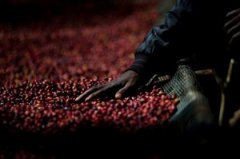
Mysterious country's mystery coffee boutique Indian coffee wind-stained Malaba coffee beans
Indian coffee style stained Malaba coffee beans our mysterious impression of India is not only its coffee, but also tea, temples, yoga, sitaqin, or even the more negative abnormal big cities, and so on. The reason why there are so many kinds of Indian beans on the market today must be attributed to the indomitable Indian coffee expert and importer Dr. Joseph Johns. Past 10

What is the East Timor Peace Wind Charity Project? Description of Coffee Flavor in Letefhao Town, East Timor
For the exchange of professional baristas, please follow the coffee workshop (Wechat official account cafe_style) East Timor coffee producing areas and flavor introduction East Timor was originally a part of Indonesia, with a unique race, culture and language, independent in 2002. In about the 17th century, coffee was planted because it experienced the colonization of Portugal and Holland successively. Coffee has a long history. In the east
The requirements of Coffee on Ecological Environment
Small seed coffee is native to the lower part of the Ethiopian rainforest in northern Africa. The temperature is relatively low, with an average annual temperature of 20 degrees. The origin of medium-grain coffee is near the equator. Therefore, small seed coffee has stronger cold tolerance and wider adaptability than medium grain coffee. Medium-grain coffee requires a slightly higher temperature. First, the requirement for temperature should be based on the natural conditions of Yunnan, and the suitable planting area of coffee should be selected.

El Salvador Mercedes Manor by washing method the wind in the manor producing area of El Salvador coffee beans
The difference between washing and washing is still quite dramatic. This coffee has a strong fruity flavor, from dry land, raisins, melons, dried bananas, malt syrup and wild honey to a hint of tobacco. We can feel a very strong, rustic syrup aroma, rich spice flavor, with the feeling of sweet wine when it is deep baked. This must not be like you before.

A unique method of monsoon stain treatment-- an introduction to the producing area and grading system of coffee in India
When it comes to Asian coffee, most people will first think of Mantenin in Indonesia, or Vietnamese coffee, Laos coffee, and Yunnan coffee. However, few people mention that Indian coffee has a long history, and it is also the first country in Asia to grow coffee. It has always had a place in the coffee world, and it is also a major country of global coffee production. Today is small.

Characteristics of coffee beans in Guji producing area of Ethiopia flavor characteristics of Guji water wind chime coffee
About Ethiopia Guji Ethiopia is the birthplace of coffee and geisha coffee and the largest exporter of coffee in Africa. In addition, it is the oldest coffee drinking country. Guji is located in southern Ethiopia, and the coffee growing area is around the Great Rift Valley of East Africa. The territory is covered with towering mountains and changeable terrain. Geology belongs to volcanic soil with fertile nutrients and good drainage.

Strange coffee with wheat flavor: Malabar style-stained coffee in India
When it comes to Asian coffee, most people will first think of Indonesian gold Manning and Toraya, or Vietnamese coffee or Lao coffee, as well as Taiwan coffee and Yunnan coffee, which have been rammed up recently. Indian coffee has a long history, and it is also the first country in Asia to grow coffee. It has always had a place in the coffee world.
The growth experience of coffee
Coffee seedlings do not blossom until about 5 years. Coffee begins to wither after flowering for 2-3 days. Green fruit gradually turns yellow after a few months. In June-September, it begins to turn red. There are roughly three varieties of coffee grown on a large scale: Arabica, also known as Arabica, which accounts for about 70% of the world's coffee acreage. The bean shape is slender, with an S-shaped line in the middle, and is native to

Kilimanjaro Fine Coffee Bean Introduction Tanzania Fine Coffee Introduction Tanzania Coffee Wind
Kilimanjaro Coffee is grown on Mount Kilimanjaro, Africa's highest mountain in northeastern Tanzania. Its coffee quality is excellent, aroma rich, sour prominent, suitable for the deployment of comprehensive coffee. Kilimanjaro coffee is an important lifeline of Tanzania's economy. About 17% of foreign exchange is generated by coffee, and the main production area is concentrated.

Panama Casa #8231; Louis-Berlina Estate Information Materials Sunlight Iron Bika Coffee Wind
Weixin Official Accounts cafe_style Introduction to Casa Ruiz Cooperative Panama Casa Ruiz Cooperative Founded in 1979, Casa Ruiz Cooperative Panama is one of the most famous cooperatives in Boquete District of Baru Volcano. Headquartered in the skirt valley of Baru Volcano, the family has been inherited for 3 generations and has more than 300 members so far.